_____________________________________________
Key facts
Dengue is a viral infection transmitted to humans through the bite of infected mosquitoes.
About half of the world’s population is now at risk of dengue with an estimated 100–400 million infections occurring each year.
Dengue is found in tropical and sub-tropical climates worldwide, mostly in urban and semi-urban areas.
While many dengue infections are asymptomatic or produce only mild illness, the virus can occasionally cause more severe cases, and even death.
Prevention and control of dengue depend on vector control. There is no specific treatment for dengue/severe dengue, and early detection and access to proper medical care greatly lower fatality rates of severe dengue.
___________
Symptoms ✍🏻
____________
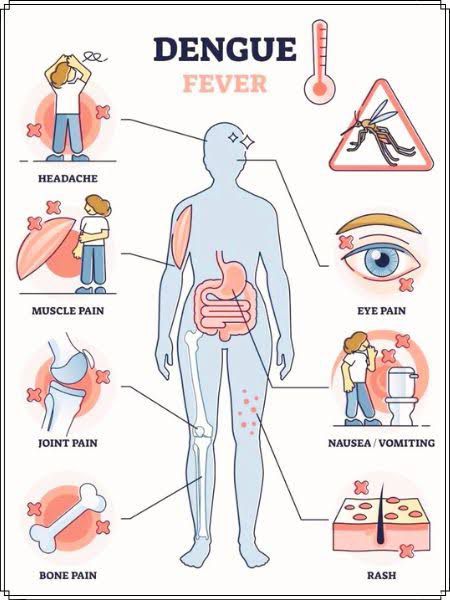
Most people with dengue have mild or no symptoms and will get better in 1–2 weeks. Rarely, dengue can be severe and lead to death.
symptoms occur, they usually begin 4–10 days after infection and last for 2–7 days. Symptoms may include:
*high fever (40°C/104°F)
*severe headache
*pain behind the eyes
*muscle and joint pains
*nausea
*vomiting
*swollen glands
rash.
Individuals who are infected for the second time are at greater risk of severe dengue.
Severe dengue symptoms often come after the fever has gone away:
•severe abdominal pain
•persistent vomiting
•rapid breathing
•bleeding gums or nose
•fatigue
•restlessness
•blood in vomit or stool
•being very thirsty
•pale and cold skin
•feeling weak.
Diagnostics and treatment
There is no specific treatment for dengue. The focus is on treating pain symptoms. Most cases of dengue fever can be treated at home with pain medicine.
Acetaminophen (paracetamol) is often used to control pain. Non-steroidal anti-inflammatory drugs like ibuprofen and aspirin are avoided as they can increase the risk of bleeding.
For people with severe dengue, hospitalization is often needed.
After recovery, people who have had dengue may feel tired for several weeks.
Prevention and control
The mosquitoes that spread dengue are active during the day.
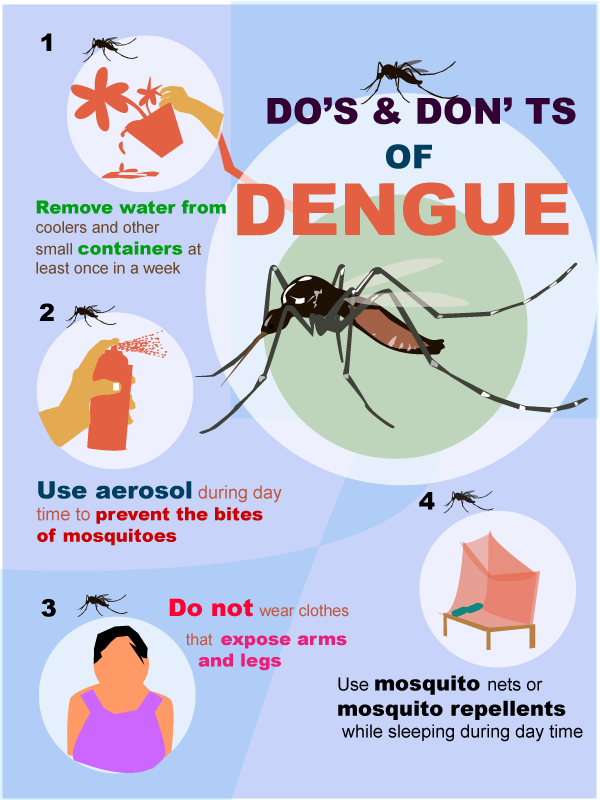
Lower the risk of getting dengue by protecting yourself from mosquito bites by using:
clothes that cover as much of your body as possible;
mosquito nets if sleeping during the day, ideally nets sprayed with insect repellent;
window screens;
mosquito repellents (containing DEET, Picaridin or IR3535); and
coils and vaporizers.
Mosquito breeding can be prevented by:
preventing mosquitoes from accessing egg-laying habitats by environmental management and modification;
disposing of solid waste properly and removing artificial man-made habitats that can hold water;
covering, emptying and cleaning domestic water storage containers on a weekly basis;
applying appropriate insecticides to outdoor water storage containers.
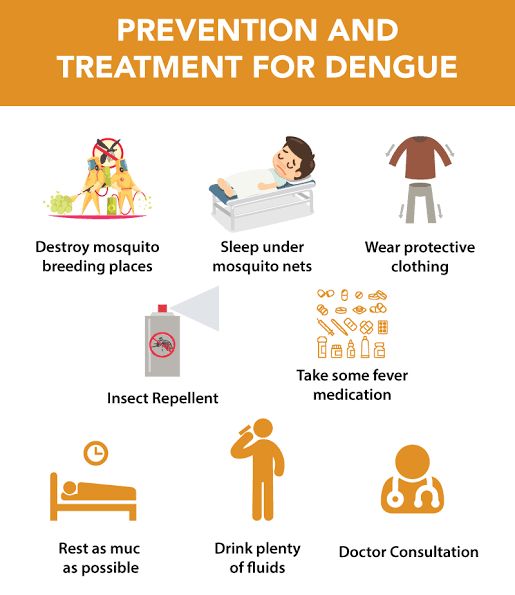
If you get dengue, it’s important to:
rest;
drink plenty of liquids;
use acetaminophen (paracetamol) for pain;
avoid non-steroidal anti-inflammatory drugs, like ibuprofen and aspirin; and
watch for severe symptoms and contact your doctor as soon as possible if you notice any.
So far one vaccine (QDenga) has been approved and licensed in some countries. However, it is recommended only for the age group of 6 to 16 years in high transmission settings. Several additional vaccines are under evaluation.
Source of WHO guidelines
Post by -Fitnessguruji ✍🏻
Visit again.
 Fitness Guru Ji
Leave a comment